





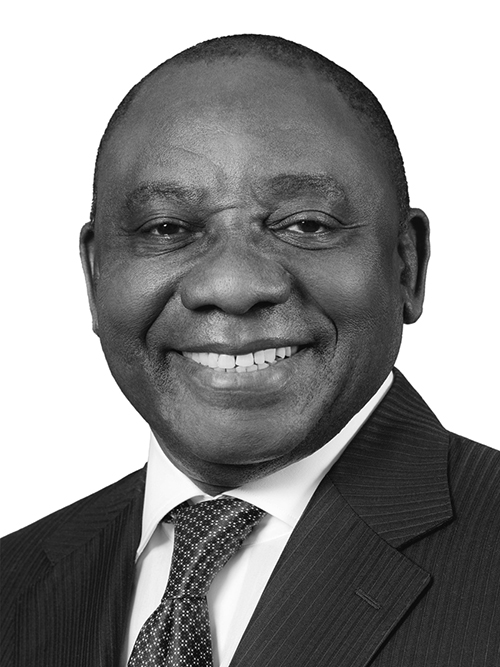
Address by President Cyril Ramaphosa to the South Africa and the AI Opportunity Conference on the occasion of his Working Visit to Silicon Valley, San Jose, United States of America
Ministers,
Directors-General and senior government officials,
Business leaders and investors,
Leaders of technology companies,
Researchers, academics and students,
Entrepreneurs and innovators,
Distinguished guests,
Fellow South Africans,
Good morning.
When we first gathered as a South African delegation on Sunday, I said that we had not come to Silicon Valley merely to see the future.
We had come to understand how that future is being made, to learn from those who are making it, and to determine how South Africa can become an active participant in shaping it.
We came here with a sense of purpose.
We came to learn, to engage, to forge partnerships and to identify opportunities that can accelerate the economic and technological development of our country.
We came because we recognise that the world is entering a new era of technological change, one that will fundamentally transform economies, industries, institutions and societies.
And we came because we are determined that South Africa, and indeed the African continent, should not be left behind.
Over the past few days, we have visited some of the world’s leading technology companies, research institutions and centres of innovation.
We have engaged with scientists, engineers, entrepreneurs and business leaders who are at the forefront of developing technologies that are changing our world.
We have seen the extraordinary pace at which artificial intelligence is advancing.
We have gained a better understanding of the immense computing power, scientific knowledge, investment and human ingenuity that are driving this transformation.
We have also gained a deeper appreciation of the opportunities that this technological revolution presents for a country like ours.
Today, we move from being visitors to being hosts.
This is our conference.
It is an opportunity for South Africa to set out its own ambitions, to demonstrate its capabilities, and to make a compelling case for investment and partnership.
It is an opportunity to explain not only what we hope to gain from the artificial intelligence revolution, but also what we can contribute to it.
For we have not come here simply to ask what Silicon Valley can do for South Africa.
We have also come to demonstrate what South Africa can offer Silicon Valley, the United States and the global technology industry.
We believe that there is a compelling case for a partnership founded on mutual benefit, shared innovation and the creation of new economic opportunities.
Throughout human history, technological advances have been among the most powerful drivers of economic development and social development.
The steam engine transformed manufacturing and transport.
Electricity transformed industry, agriculture and everyday life.
The internal combustion engine transformed mobility, commerce and the organisation of modern economies.
The semiconductor, the computer and the internet ushered in the digital age.
Each of these technological revolutions fundamentally changed the way people lived and worked.
Each created new industries, new occupations, new markets and new sources of wealth.
And each altered the economic balance between nations.
We are now witnessing another transformation of comparable, and potentially even greater, significance.
Artificial intelligence is not simply another technological innovation.
It is a general-purpose technology with the potential to transform virtually every sector of economic and social activity.
It will change how we manufacture goods, grow food, generate electricity, extract minerals, deliver healthcare, educate our children and provide public services.
It will change the nature of work, the organisation of enterprises and the relationship between citizens and the state.
It will create industries that do not yet exist and occupations that we cannot yet imagine.
The scale of investment taking place is extraordinary.
The largest American technology companies are expected to invest hundreds of billions of dollars in AI infrastructure this year alone, with estimates approaching 670 billion dollars.
We are witnessing one of the greatest mobilisations of private capital in modern economic history.
And yet this investment is highly concentrated.
A substantial majority of the world’s advanced AI computing capacity is located in a small number of countries.
Africa, which is home to nearly one-fifth of humanity, accounts for only a tiny fraction of global data centre capacity.
The implications of this concentration are profound.
The countries that control computing infrastructure, advanced technologies, data and scientific capabilities will enjoy considerable advantages in the emerging global economy.
Those that fail to develop these capabilities risk becoming increasingly dependent on technologies, products and services developed elsewhere.
This presents a particular challenge for Africa.
Our continent has experienced previous technological revolutions without fully capturing their economic benefits.
We have too often supplied the raw materials that powered industrial development elsewhere, while importing the finished products at much greater cost.
We have supplied minerals to the world, but have not always developed the industries that transform those minerals into sophisticated products.
We have produced talented scientists, engineers and innovators, many of whom have gone abroad to build the technological capabilities of other nations.
We cannot allow the artificial intelligence revolution to reproduce these historical patterns of inequality and dependence.
We cannot be content to remain merely consumers of technologies developed by others.
We must become developers, producers, innovators and owners of technologies.
We must build the capabilities that will enable us to participate across the AI value chain.
And we must ensure that the benefits of this technological revolution are widely shared among our people.
This is not simply an economic imperative.
It is a developmental imperative.
It is about the kind of country we want South Africa to become and the place we want Africa to occupy in the world.
We should be ambitious about what South Africa can achieve.
But our ambition must be grounded in a clear understanding of our strengths, our capabilities and the opportunities before us.
We recognise that the development of the most advanced frontier AI models requires enormous investments in computing infrastructure, specialised expertise and research.
Artificial intelligence is not a single product or a single industry.
It is an entire economic ecosystem.
It begins with the minerals and materials that go into semiconductors and other advanced technologies.
It includes the electricity that powers computing infrastructure, the data centres that house it, and the telecommunications networks that connect it.
It includes research, software engineering, data development, model training, model adaptation and the creation of applications.
It extends into manufacturing, agriculture, mining, finance, education, healthcare, transport, government and virtually every other sector.
There is value to be created, investment to be attracted and employment to be generated at every stage of this ecosystem.
Our task is to identify those areas in which South Africa has a competitive advantage, to strengthen our capabilities and to move progressively into activities of greater technological sophistication and economic value.
We must not think of ourselves as being confined to one part of the value chain.
We must develop the capacity to move along that chain, from supplying materials and infrastructure to developing technologies, creating intellectual property and building globally competitive enterprises.
That is how countries achieve lasting technological and economic transformation.
And that is the ambition we should have for South Africa.
Our country already possesses important foundations on which to build.
We have a diversified industrial economy.
We have sophisticated financial institutions, established telecommunications networks, universities, research institutions and a growing technology sector.
We have a strong base of scientific and engineering expertise.
We have world-class capabilities in mining, mineral processing, manufacturing, agriculture, financial services and other industries that can benefit substantially from the application of artificial intelligence.
We have a vibrant entrepreneurial community and a generation of young South Africans who are eager to participate in the digital economy.
Above all, we occupy a strategic position as a gateway to a rapidly growing African market.
These are significant advantages.
We must now bring them together in a deliberate and coordinated national effort.
One of the clearest lessons from our engagements this week is that the artificial intelligence economy rests on a substantial physical foundation.
When people speak about artificial intelligence, they often think of software, algorithms and intelligent machines.
Yet none of these technologies can function without electricity, computing equipment, data centres, telecommunications networks and the physical infrastructure that supports them.
The digital economy is built on a physical economy.
And the extraordinary growth of artificial intelligence is creating unprecedented demand for that infrastructure.
Around the world, access to reliable electricity, suitable land, water where required, and connections to transmission networks has become a major consideration in decisions about where to locate new computing facilities.
This presents South Africa with a significant opportunity.
We have substantial energy resources, including some of the world’s best solar and wind resources.
We are implementing far-reaching reforms to our electricity sector, expanding generation capacity, strengthening transmission infrastructure and creating a more competitive electricity market.
We have made important progress in improving the reliability of electricity supply.
Our sustained reduction in load shedding demonstrates what can be achieved through focused implementation, cooperation and reform.
We now need to build on this progress to ensure that electricity becomes an enabler of industrial growth and technological development.
We also have existing industrial sites, including power station sites approaching the end of their operational lives, that may be suitable for redevelopment.
Some of these sites already have valuable grid connections, transport infrastructure and other industrial facilities.
With proper planning, technical assessment and investment, they could become centres of new economic activity, including data centres, advanced manufacturing and digital industries.
In this way, we can give new economic life to communities that have powered South Africa’s development for generations.
South Africa is already a leading location for data centre investment on the African continent.
We should seek to make South Africa a preferred destination for investment in AI computing infrastructure serving both our domestic economy and the wider African market.
A large data centre can represent billions of rand in capital investment.
It can generate substantial demand for construction, electrical engineering, cooling systems, transformers, switchgear, energy storage and specialised maintenance services.
It can create opportunities for local manufacturers and suppliers.
It can stimulate investment in electricity generation, transmission and telecommunications.
And, most importantly, it can provide the computing infrastructure needed by our researchers, universities, businesses, entrepreneurs and public institutions.
We must, however, be clear that the construction of data centres alone will not deliver the employment and industrial development we seek.
We must use these investments to build wider industrial ecosystems, develop skills, strengthen local supply chains and create new enterprises.
Our objective must be to turn investment in computing infrastructure into a catalyst for broad-based economic development.
Infrastructure is essential, but it is only one part of the opportunity.
Another critical area is the development of AI technologies that respond to the particular needs and circumstances of our society.
Much of the data used to develop today’s leading AI systems comes from a relatively small number of countries and languages.
African languages, histories, cultures and experiences remain significantly underrepresented.
This has important consequences.
A system that does not adequately understand isiZulu, isiXhosa, Sesotho, Sepedi, Setswana, Tshivenda or Xitsonga will not serve all our people equally.
A system that has not been developed with an understanding of African farming conditions, disease patterns, educational challenges or public administration may not provide the solutions we need.
We therefore have an important opportunity to develop African datasets, strengthen research in African languages and adapt AI technologies to our own circumstances.
We must do this while respecting privacy, protecting personal information and ensuring that data is collected and used responsibly.
Our universities, science councils, technology companies and researchers can play a leading role in this work.
We should establish partnerships that enable South African researchers to work alongside the world’s leading scientists and engineers.
We should develop the computing facilities and research capabilities that allow them to undertake advanced work here at home.
And we should support the creation of intellectual property and new enterprises arising from this research.
We must ensure that our universities are not simply preparing graduates to work for technology companies elsewhere.
They must also become centres of innovation from which new South African technologies, products and businesses emerge.
There is no reason why South Africa should not produce globally competitive AI companies.
There is no reason why our researchers should not make important contributions to advances in machine learning, robotics, language technologies and other fields.
And there is no reason why innovations developed in South Africa should not find markets across Africa and throughout the world.
We have already demonstrated that South Africans can make important contributions to the global digital economy.
Some of the foundational engineering work associated with Amazon Web Services was undertaken in Cape Town.
Our technology sector has developed internationally competitive capabilities in software engineering, financial technology and business services.
Our global business services industry employs large numbers of South Africans serving international clients.
These achievements demonstrate what is possible.
But we should aim much higher.
We should seek to make South Africa a major centre for AI research, software development, engineering, data services and technology entrepreneurship.
We should create an environment in which international technology companies establish substantial research and development operations in our country.
We should encourage them to work with our universities, train our young people, develop local suppliers and support South African technology enterprises.
And we should ensure that South African entrepreneurs have access to the computing power, finance, expertise and markets they need to succeed.
Ladies and Gentlemen,
The opportunities presented by artificial intelligence extend far beyond the technology industry itself.
For South Africa, perhaps the greatest economic benefits will come from applying these technologies to improve productivity across our existing industries.
We are a country with deep industrial capabilities, but we are also a country that urgently needs to raise productivity, accelerate economic growth and create employment.
Artificial intelligence can help us achieve these objectives.
In mining, AI can improve geological exploration, mineral recovery, equipment maintenance and workplace safety.
In agriculture, it can help farmers manage water more efficiently, identify crop diseases, improve yields and respond to changing weather conditions.
In manufacturing, it can improve production processes, reduce waste, strengthen quality control and enable firms to compete more effectively in global markets.
In energy, it can improve demand forecasting, grid management, system maintenance and the integration of renewable electricity.
In healthcare, it can support earlier diagnosis, improve the management of medical information and extend the reach of scarce specialist expertise.
In education, it can provide new tools to support teachers, personalise learning and expand access to knowledge.
In government, it can help us improve the delivery of public services, strengthen planning, identify inefficiencies and make public institutions more responsive to citizens.
These are not distant possibilities.
Many of these applications are already being developed and deployed.
Our responsibility is to ensure that they are adapted and applied in ways that address South Africa’s most pressing developmental challenges.
We should ask ourselves how AI can help us improve the quality of education in township and rural schools.
How can it help us improve the functioning of clinics and hospitals?
How can it help municipalities detect water losses, maintain infrastructure and deliver better services?
How can it help us strengthen the fight against crime, while protecting constitutional rights and ensuring proper oversight?
How can it help small businesses become more productive and competitive?
And how can it enable emerging farmers and entrepreneurs to gain access to knowledge, technology and markets that were previously beyond their reach?
These are the practical questions that should guide our national AI programme.
We should measure the success of artificial intelligence not only by the sophistication of the technologies we develop, but by the improvements they bring to the lives of our people.
Ladies and Gentlemen,
As we pursue these opportunities, we must recognise that technological progress does not automatically lead to inclusive development.
History teaches us that new technologies can create great wealth while also displacing workers, concentrating economic power and widening inequality.
Artificial intelligence presents similar risks.
It has the potential to transform many occupations and automate tasks that are currently performed by people.
It may create new employment opportunities, but it may also disrupt existing industries and occupations.
For a country already confronting high unemployment, poverty and inequality, these risks cannot be ignored.
We must therefore place the development of human capabilities at the centre of our AI strategy.
We need to equip our young people with the knowledge and skills required to participate in the emerging economy.
We need to strengthen mathematics, science, digital literacy and computational thinking throughout our education system.
We need to expand the training of engineers, computer scientists, data specialists, technicians and artisans.
We need to strengthen our universities, technical and vocational education and training colleges, and other institutions of learning.
But we must also recognise that AI will affect workers across the economy, not only those employed in technology-related occupations.
We will need programmes to retrain and upskill workers, support enterprises in adopting new technologies and assist people whose jobs are affected by automation.
Government, business, universities and organised labour will need to work together in this endeavour.
Our objective must be to use technology to expand human opportunity, not to diminish it.
We should seek an economy in which AI enhances the capabilities of workers, improves productivity and creates new forms of employment and enterprise.
We should not allow the benefits of this revolution to be captured by a small number of firms or a narrow segment of society.
The gains must contribute to greater prosperity, broader participation and a more inclusive economy.
Ladies and Gentlemen,
The opportunities before us will not be realised through ambition alone.
They require deliberate action, effective institutions and sustained cooperation between government, business, universities and research institutions.
That is why we are developing a comprehensive national approach to artificial intelligence.
We need to move with urgency.
We must ensure that our regulatory environment provides certainty for investment while protecting the rights and interests of our people.
We must strengthen our digital infrastructure and expand access to affordable connectivity.
We must improve access to reliable electricity and facilitate investment in the computing infrastructure that the AI economy requires.
We must strengthen our research and innovation system.
We must develop the skills required for this new era.
And we must create an enabling environment for entrepreneurs, start-ups and technology companies.
One of the practical priorities arising from this visit should be to develop a coordinated investment proposition for companies wishing to establish AI infrastructure and operations in South Africa.
Investors should not have to navigate a fragmented system of approvals, electricity connections, land availability and infrastructure planning.
We need to bring these elements together in a coherent and competitive offering.
We should identify suitable locations for investment, assess their infrastructure requirements and work across government to remove unnecessary obstacles.
We should be able to present potential investors with clear opportunities, defined processes and credible implementation arrangements.
At the same time, we must ensure that our approach to artificial intelligence is guided by the values of our Constitution.
We must protect privacy, human dignity, equality and the rights of citizens.
We must guard against the misuse of AI, including discrimination, disinformation, fraud and threats to security.
We must promote responsible innovation and ensure that public trust is maintained.
We should pursue technological advancement and effective governance together, recognising that each strengthens the other.
Ladies and Gentlemen,
This conference takes place at an important moment in the relationship between South Africa and the global technology industry.
For many decades, American companies have invested in South Africa, established operations in our country and contributed to the development of our economy.
We value these relationships.
We now have an opportunity to take them to a new level.
Our message to the companies represented here today is straightforward.
We invite you to make South Africa a strategic partner in the development of the artificial intelligence economy.
We invite you to invest in our digital and computing infrastructure.
We invite you to establish research and development facilities in our country.
We invite you to work with our universities and science councils.
We invite you to support the development of South African engineers, scientists, researchers and entrepreneurs.
We invite you to build partnerships with our technology companies and to participate in the development of applications that address African challenges.
And we invite you to use South Africa as a base from which to serve the growing markets of the African continent.
In doing so, we are not asking for charity.
We are presenting an investment and partnership opportunity.
South Africa offers an established industrial economy, a sophisticated financial system, a strong scientific base, substantial energy resources, advanced connectivity and access to a large and growing continental market.
We offer the opportunities created by the African Continental Free Trade Area and the potential of a continent whose population and economic significance will continue to grow.
We also offer a government that recognises the importance of technological development and is committed to creating the conditions for investment and innovation.
In return, we seek partnerships that are meaningful and enduring.
Partnerships that develop local capabilities.
Partnerships that transfer knowledge and deepen research collaboration.
Partnerships that create opportunities for South African enterprises.
Partnerships that support skills development and employment.
Partnerships that enable our researchers and innovators to participate in the creation of new technologies.
And partnerships that contribute to the broader development of the African continent.
We should emerge from this visit not simply with expressions of goodwill, but with concrete commitments and a programme of action.
We should identify specific investment opportunities, research partnerships, skills programmes and areas of technological cooperation.
We should establish mechanisms to take these initiatives forward, monitor progress and ensure implementation.
The true measure of the success of this visit will not be the number of companies we have visited or the number of meetings we have held.
It will be the investments that follow, the partnerships that are established, the technologies that are developed, the enterprises that are created and the opportunities that are opened to our people.
Ladies and Gentlemen,
I want to address a particular message to the young South Africans who have joined us on this visit.
You are here not merely as observers of technological change.
You are here as future participants in shaping that change.
You represent the generation that will lead South Africa through this new era of scientific and technological development.
Some of you will become researchers and scientists.
Some will become engineers and entrepreneurs.
Some will establish companies that develop technologies we cannot yet imagine.
Others will use artificial intelligence to transform agriculture, mining, manufacturing, healthcare, education and public administration.
I want you to return to South Africa with a renewed sense of possibility.
I want you to be inspired by what you have seen here.
But I also want you to recognise that the achievements of Silicon Valley did not happen by accident.
They are the result of decades of investment in education, scientific research, entrepreneurship, infrastructure and innovation.
They are the product of cooperation between universities, government, private enterprise and investors.
They demonstrate what can be achieved when a society deliberately builds the institutions, capabilities and conditions necessary for technological progress.
We must draw lessons from this experience.
We must build our own centres of innovation.
We must nurture our own scientists and entrepreneurs.
We must mobilise our own resources and attract international investment.
And we must have the confidence that South Africans are capable of making important contributions to the world’s scientific and technological progress.
The next generation of great technological innovations should not come only from Silicon Valley, Beijing, London or other established centres of innovation.
Some of them should come from Johannesburg, Cape Town, Tshwane, Durban, Gqeberha and other centres across our country.
They should also come from the townships and rural communities where so much talent and potential remain untapped.
That is the future we must work to create.
Ladies and Gentlemen,
We are at a defining moment.
The foundations of the global AI economy are being laid now.
Decisions are being taken today that will influence the distribution of economic opportunity, technological capability and prosperity for decades to come.
Africa cannot afford to stand on the sidelines while these decisions are made.
By the middle of this century, approximately one in four people in the world will be African.
Our continent will have one of the world’s largest populations of young people.
It will represent an increasingly important market for goods, services, technology and investment.
The question is whether Africa will participate in this new economy primarily as a market for technologies developed elsewhere, or whether it will also become a centre of production, research, innovation and enterprise.
For South Africa, the choice is clear.
We want to be builders of the future, not merely recipients of it.
We want to develop the scientific and technological capabilities that will enable us to compete in the global economy.
We want to use artificial intelligence to accelerate industrialisation, raise productivity, improve public services and create employment.
We want our universities and research institutions to contribute to the frontiers of human knowledge.
We want our entrepreneurs to establish companies that compete internationally.
We want our young people to have the skills, opportunities and confidence to participate fully in the digital economy.
And we want South Africa to play a leading role in ensuring that the African continent benefits from this technological revolution.
Our visit to Silicon Valley is an important step in this journey.
But it must be the beginning of a sustained national effort.
When we return home, we must translate what we have learned into action.
We must turn our engagements into partnerships.
We must turn our partnerships into investments.
We must turn our investments into productive capabilities.
And we must turn those capabilities into economic growth, employment and a better life for our people.
I hope that this conference will be remembered not simply as an occasion on which South Africa presented its ambitions to the world’s technology leaders.
I hope it will be remembered as a moment when we began to forge the partnerships and take the decisions that would help transform our country’s technological and economic future.
Let us approach this opportunity with ambition, confidence and determination.
Let us be bold in what we seek to achieve.
Let us be practical and disciplined in how we pursue it.
And let us ensure that the artificial intelligence revolution becomes an instrument for the development and prosperity of all our people.
We have not come to Silicon Valley to ask for a place in someone else’s future.
We have come to build partnerships through which we can help shape a future of our own.
I thank you.
.png)

.png)

